
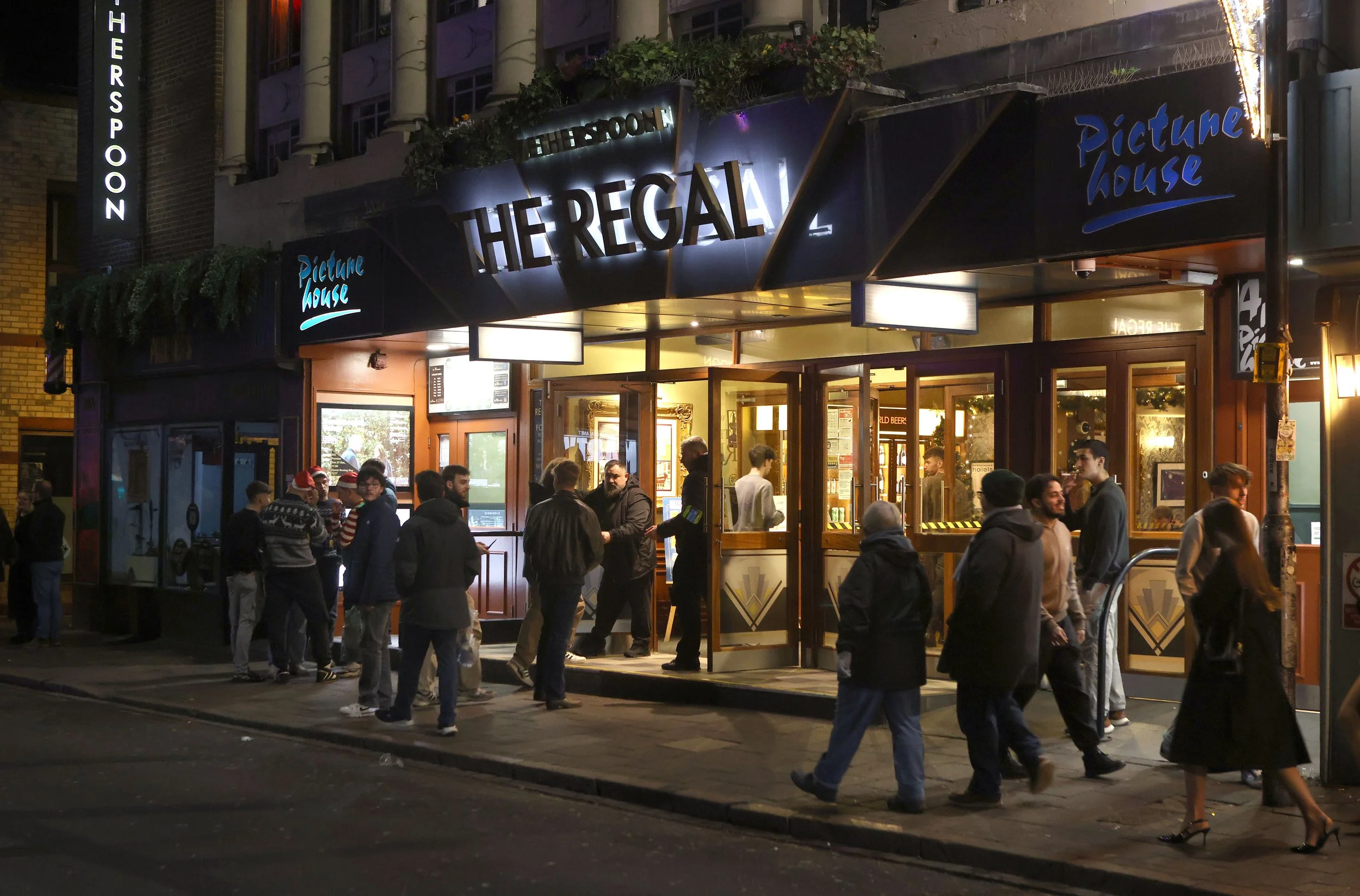
Natalie Dix, Cambridge BID | Hannah Hancock, CAMBAC | January 2026
Overview
December is one of the busiest and most important trading periods for Cambridge’s city centre, with increased footfall, later trading hours, and a higher concentration of visitors and residents enjoying the festive offer.
To ensure the city remained safe, welcoming, and well-managed throughout the festive season, Cambridge BID and CAMBAC coordinated an enhanced multi-agency safety and welfare programme across the night-time economy (NTE).
This coordinated approach focused on:
· Prevention and early intervention
· Visible reassurance in key hotspots
· Rapid response and welfare support
· Supporting businesses to trade confidently
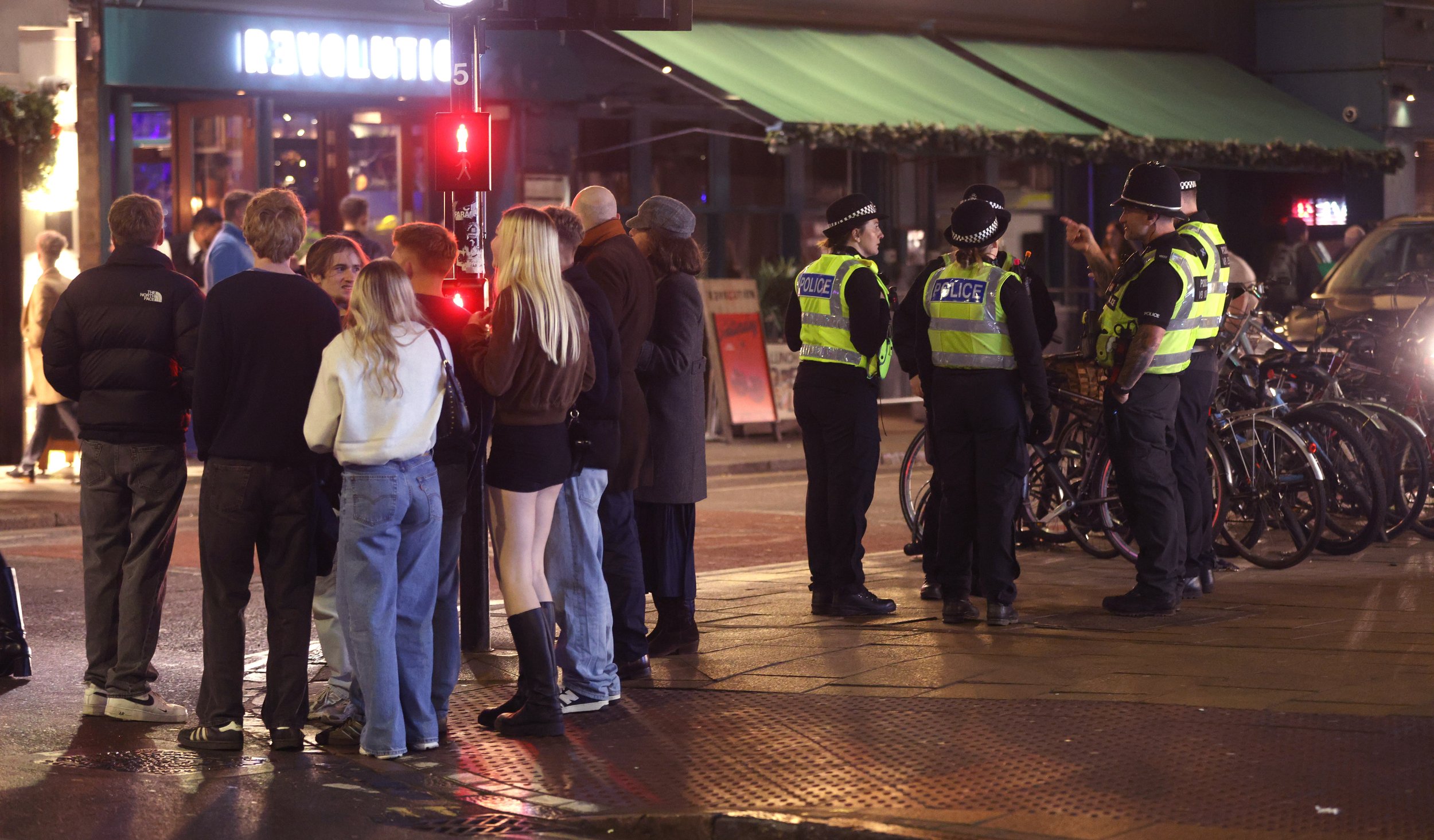
Throughout December, Cambridge BID and CAMBAC worked with partners to strengthen delivery of Purple Flag initiatives, ensuring appropriate coverage across peak nights—particularly Fridays, Saturdays, and New Year’s Eve.
Funding and Partnership Approach
The festive safety programme was made possible through combined investment and partnership working. Cambridge BID, CAMBAC, and Cambridge Street Pastors received additional funding of just under £15,000 from the Police & Crime Commissioner through the Winter of Action in Town and City Centres programme, which enabled enhanced Purple Flag initiatives throughout December. This funding was used by Cambridge BID, CAMBAC and Street Pastors to cover additional initiative throughout the City.
Alongside this, Cambridge City Council funding supported the continued provision of St John Ambulance, ensuring clinical support was available in the city centre on key dates across the festive period.
This shared investment enabled a more coordinated response across partners, strengthening Cambridge’s Purple Flag delivery and ensuring consistent support for businesses, visitors and residents during the busiest nights of the year.
Footfall Snapshot: December Night-Time Economy (Cambridge BID Counters)
Footfall in Cambridge city centre remained strong across December, demonstrating continued demand for the festive night-time economy. Cambridge BID captures footfall through city centre counters, enabling monitoring across key Purple Flag and late-nighttime bands.
Across the month of December, Purple Flag hours (5pm–5am) saw continued year-on-year growth, rising from 1,040,059 (Dec 2024) to 1,060,820 (Dec 2025) — an increase of +2.0%. Compared to Dec 2023 (973,164), Purple Flag footfall is up +9.0%, showing a sustained uplift in evening and overnight city activity.
In comparison, late-night economy footfall (10pm–3am) decreased slightly year-on-year, from 249,924 (Dec 2024) to 237,743 (Dec 2025) — a change of -4.9%. This follows a wider downward trend from Dec 2023 (281,749), meaning late-night footfall is -15.6% compared to 2023.
This suggests that while overall evening and overnight activity remains strong, demand is increasingly concentrated earlier in the evening across the wider Purple Flag window.
December totals (city centre counters):
Purple Flag hours (5pm–5am):
2025: 1,060,820
2024: 1,040,059
2023: 973,164
Late-night economy (10pm–3am):
2025: 237,743
2024: 249,924
2023: 281,749
Key Dates: Footfall vs St John Ambulance Activity (10pm–3am)
To show the scale of welfare provision against demand, St John Ambulance activity can be compared to footfall volumes on key dates.
19–20 December (10pm–3am)
· Footfall (10pm–3am): 28,169
· St John Ambulance patients treated: 7 (2 on 19th + 5 on 20th)
Treatment rate vs footfall: 0.0249%
(approx. 1 person treated per 4,024 people in the city centre during that time band)
31 December – New Year’s Eve (10pm–3am)
· Footfall (10pm–3am): 19,345
· St John Ambulance patients treated: 11
Treatment rate vs footfall: 0.0569%
(approx. 1 person treated per 1,759 people in the city centre during that time band)
Measures Put in Place
Taxi Marshals & Open Space Guardians (OSG) (Funded by Winter in Action Funding)
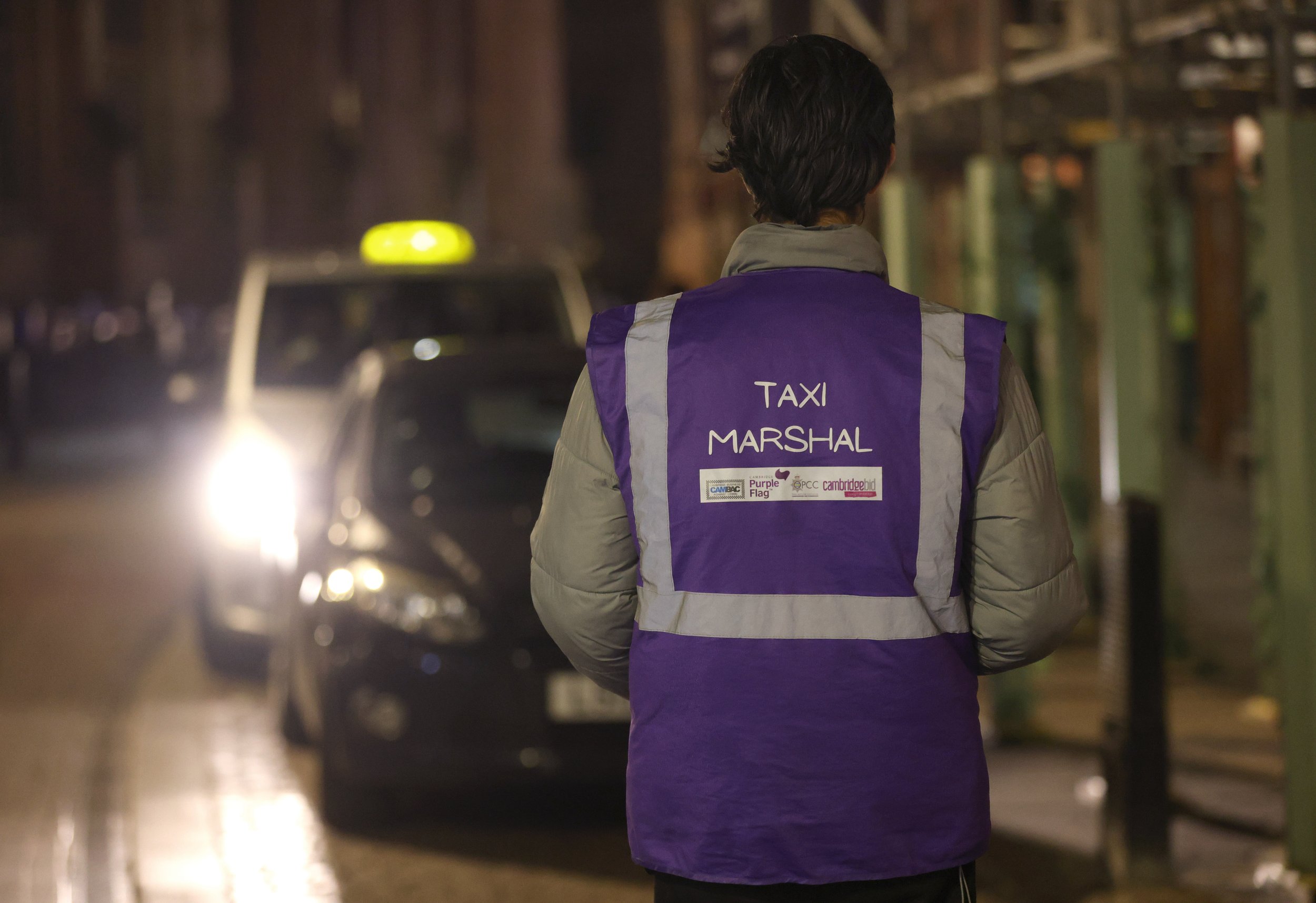
To provide visible reassurance and front-line support across the city centre, Cambridge BID and CAMBAC commissioned both Taxi Marshal and Open Space Guardian coverage on peak festive nights.
Deployment overview:
· Cover delivered across Fridays and Saturdays in the run up to Christmas
· Enhanced support in place for New Year’s Eve
· Deployed in key NTE locations to support queue management, prevent escalation, and provide a rapid welfare response
Season delivery snapshot:
· Over 210 hours of SIA staffing delivered across the festive season (Taxi Marshals + Open Space Guardians combined)
o St Andrews Rank and Rose Cresent Rank covered (2 SIA marshals at each rank 10pm – 4am)
§ 5th and 6th December
§ 12th and 13th December
§ 19th and 20th December
§ 31st December
§ 30th and 31st January
· Over 700 taxis supported by the Taxi Marshals over the festive season
This presence helped support safe dispersal, reduce pressure on venues, and provide additional eyes-and-ears across the city centre during peak periods.
Street Pastors & NightLite (Additional funding from Winter in Action Funding)
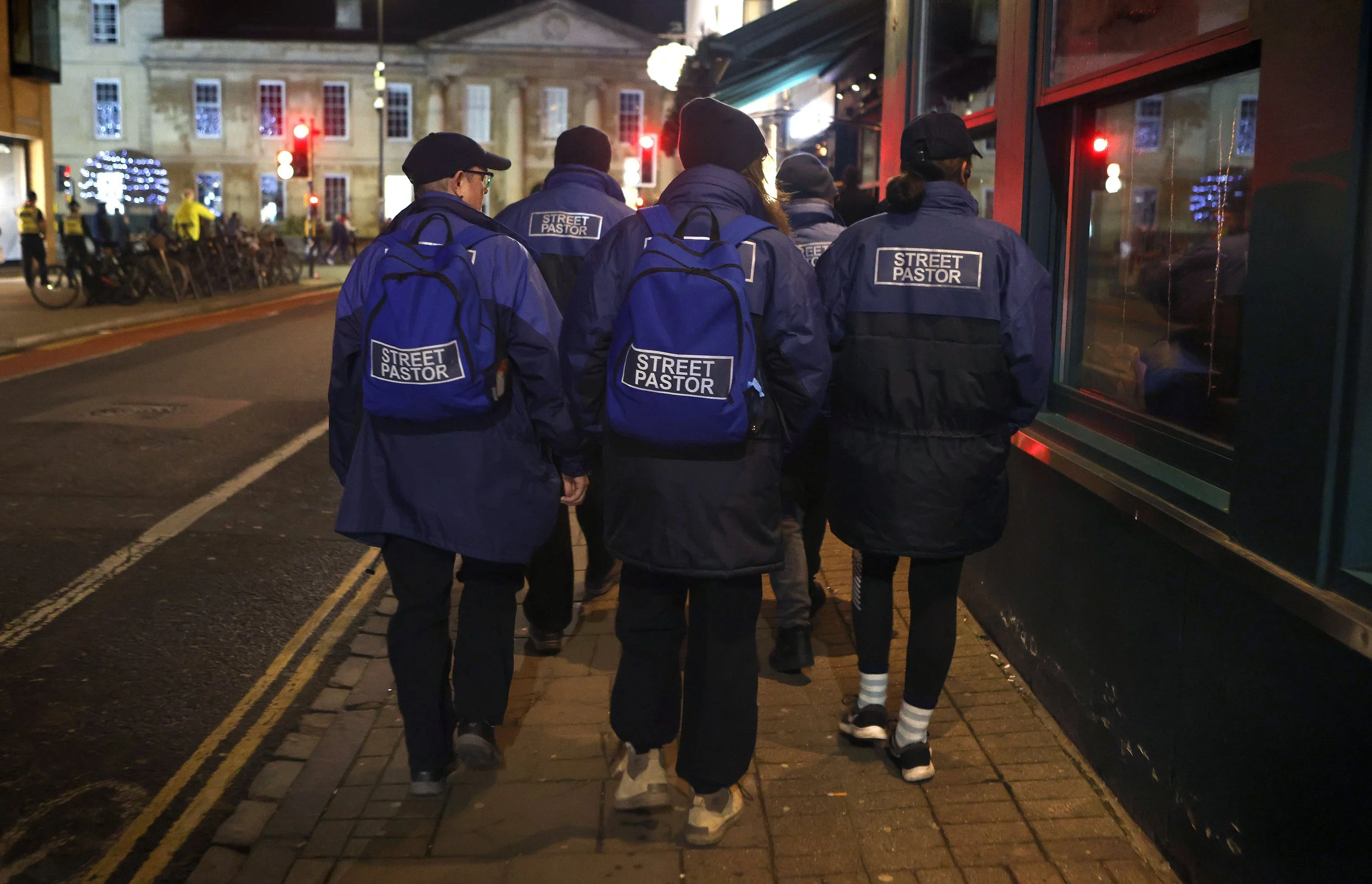
Street Pastors and NightLite remained vital pillars of welfare support throughout the festive season, providing a trusted and approachable response for those needing help.
Street Pastors:
· On patrol every Saturday until Christmas, plus New Year’s Eve
· Additional deployment on Friday 19 December
NightLite:
· Open every Saturday until Christmas, plus New Year’s Eve
· Additional opening on Friday 19 December
Impact data:
145 Volunteer Patrol and Nigthlite hours (all evenings and early morning)
91 individuals helped/hosted
8 CAMBAC callouts
336 bottles and glassed removed from the streets
38 broken bottles and glasses swept
20 pairs of flip-flops given
2 evenings operating in partnership with St John Ambulance
This consistent welfare offer provided practical support, reassurance, and a safe space for individuals during busy festive trading nights.
St John Ambulance (City Centre Clinical Provision) (Funded by Cambridge City Council)
As part of the festive season safety programme, St John Ambulance (SJA) provided city centre clinical support on key peak nights. This provision ensured that medical and welfare issues could be
quickly and professionally, helping reduce pressure on venues, supporting safer outcomes for individuals, and improving overall night-time economy management during the busiest period of the year.
St John Ambulance is widely used for event and city-centre medical cover because it provides:
· Early triage and treatment for minor injury and illness
· On-site clinical decision-making to determine escalation needs
· Visible reassurance and a clear welfare pathway during high footfall periods
Dates Covered
St John Ambulance provision was funded by Cambridge City Council and delivered on:
· 19 December 2025
· 20 December 2025
· 31 December 2025 (New Year’s Eve)
Activity and Outcomes
Across the festive deployment dates, St John Ambulance treated a range of welfare and clinical presentations including intoxication support, minor injuries, and medical concerns requiring escalation.
Patient Outcomes
19 December 2025
· 2 patients treated
· 1 returned to event
· 1 discharged into the care of a welfare team
20 December 2025
· 5 patients treated
· 3 returned to event
· 2 conveyed to Addenbrooke’s Hospital
31 December 2025 (New Year’s Eve)
· 11 patients treated
· 8 returned to event
· 2 referred to Minor Injuries Unit
· 1 conveyed to Addenbrooke’s ED
Total (19th / 20th / 31st December):
· 18 patients treated
· 12 returned to event safely following treatment
· 2 referred to Minor Injuries Unit
· 3 conveyed to ED
· 1 discharged into welfare care support
This means two-thirds of patients treated (12 of 18) were supported safely and were able to remain in the city environment following treatment. This demonstrates the value of having accessible clinical provision during peak festive nights to prevent avoidable escalation and support safe trading conditions.
Why this matters: NHS pressure and system context
December is a period of well-recognised winter pressure across emergency services. National NHS cost context helps to show why early triage and on-site clinical response is beneficial during peak city-centre nights.
The King’s Fund reports that in 2023/24:
· The estimated average cost of a patient taken to A&E by ambulance was £459
· Ambulance call outs that did not result in transport to A&E cost £327
· The average cost range for a patient receiving treatment in a major A&E department was £173–£563, depending on complexity
o The King’s Fund reports - https://www.kingsfund.org.uk/insight-and-analysis/data-and-charts/key-facts-figures-nhs
While the Cambridge programme does not claim direct “cashable savings”, the December figures show that 12 people were treated and returned to event, which strongly indicates the operational value of on-site triage in reducing avoidable emergency escalation.
Added value to the night-time economy
St John Ambulance provision delivered three key benefits:
1) Reduced pressure on venues
Venues had access to a dedicated clinical pathway during peak operating times, reducing the burden on frontline staff who would otherwise manage welfare incidents without clinical support.
2) Faster, safer decisions for patients
Clinical triage supported proportionate outcomes including treatment on-site, discharge into welfare care, referral to MIU or escalation to ED.
3) Strengthened reassurance during peak nights
A visible clinical presence helps improve public confidence and reinforces Cambridge’s Purple Flag delivery during the busiest period of the year.
I AM DES – “Designated Driver” Campaign
Recognising that drink-driving risk increases during the festive season, Cambridge BID supported delivery of the I AM DES – Designated Driver campaign in partnership with CAMBAC and Cambridgeshire Constabulary.
The campaign encouraged groups to plan by choosing a designated driver, who would receive free or reduced-price soft drinks at participating venues across Cambridge.
Campaign highlights:
Delivered in partnership with CAMBAC and Cambridgeshire Constabulary
Over 20 businesses took part in the scheme
Venues displayed campaign materials and delivered the offer using designated driver stamps
Supported by venue staff guidance to ensure consistent and responsible delivery
This campaign supported safer festive travel choices while helping venues play an active part in wider harm reduction messaging.
Communications and Public Messaging (Cambridge BID Funded)
To ensure the public knew where support was available, Purple Flag messaging was reinforced through a range of channels across the festive season.
Messaging activity included:
Citywide poster campaign (including bus stop advertising at Cambridge Station)
In-venue Purple Flag safety materials distributed across city centre venues
Festive safety radio campaign on Greatest Hits Radio and Hits Radio throughout December
Comms performance data to include:
Poster distribution numbers: Over 100
Radio campaign reach: 75733
Radio campaign OTH: 4.98
Radio campaign Spots: 212
This coordinated messaging strengthened awareness of safety initiatives and supported public confidence during peak festive activity.
Outcomes and Impact
The enhanced Purple Flag festive programme delivered a visible and coordinated response, supporting safe trading conditions for businesses and ensuring welfare support was accessible across peak nights.
Key outcomes included:
Consistent front-line coverage across high-demand nights (Fridays, Saturdays, NYE)
210+ hours of SIA coverage delivered across festive deployments
700+ taxis supported via Taxi Marshal provision
18 patients treated by St John Ambulance during December festive nights, with 12 able to return to the event safely following treatment
Strengthened public confidence through visible reassurance and coordinated communications
This programme also reduced pressure on venues by providing additional welfare support, clear escalation pathways, and multi-agency response capacity.
Partner Feedback
“We had the busiest festive season I have experienced during my ten years working in Cambridge. The visible Purple Flag initiatives and partnership working made a real difference, helping my venue and other venues operate confidently during a very busy time.”
David Ormrod – General Manager, The Regal, JD Wetherspoon
“As a venue, it was excellent to see the impact these measures made from a support perspective. Increased policing, optional medical care via St John's and safeguarding procedures from both the street pastors and open space guardians are positive additions to the nighttime economy during these busy periods.”
Matthew Dix – General Manager, KIKI Nightclub
Conclusion
The festive season safety and welfare programme demonstrated the strength of Cambridge’s Purple Flag partnership model. By combining resources, funding and operational delivery across multiple agencies, Cambridge maintained a night-time economy that was welcoming, well-managed, and supported by visible welfare provision throughout December.
This coordinated approach continues to strengthen Cambridge’s Purple Flag commitment and provides a scalable framework for future peak trading periods.
